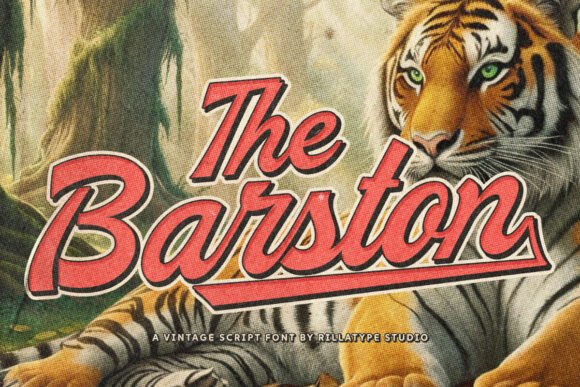
Introducing The Barston: A Sophisticated Vintage Script Font
There’s a certain magic in the elegant cursive of a vintage sign or the graceful loops of an old advertisement’s headline. It feels personal, crafted, and full of character—qualities that can be hard to find in today’s sea of minimalist sans serif font options. If you’ve ever wanted to capture that nostalgic, hand-lettered charm for your own projects, a premium font like The Barston is designed to deliver exactly that feeling. It’s more than just a typeface; it’s a bridge to a classic aesthetic, built for the demands of modern design.
So, what exactly defines The Barston? At its core, it’s a sophisticated vintage script font with a personality that balances elegance with approachability. Imagine the flowing letterforms of mid-century signage or the confident, connected strokes of a classic logo design from the 1950s. The strokes have a natural, rhythmic quality, with varying thickness that mimics the pressure of a brush or pen. This isn’t a stiff, formal script; it has a relaxed, nostalgic charm that feels both familiar and fresh. It’s the kind of creative font that can make a brand feel instantly established and trustworthy, as if it has a rich history behind it.
Where Does a Font Like The Barston Shine?
Understanding a font’s personality is one thing, but knowing where to apply it is where the real value lies. The Barston isn’t a one-trick pony. Its versatility allows it to enhance a wide array of projects, adding a layer of sophistication and old-school flair that other display fonts might miss. Think of it as a design asset that can transform the ordinary into something memorable.
In the realm of brand identity, this typeface is a powerful tool. For a boutique hotel, a craft distillery, a vintage clothing shop, or a high-end bakery, The Barston can form the cornerstone of a logo that communicates quality, tradition, and artisanal care. It tells a story before a customer even reads the words. For packaging design, it’s a natural fit. Imagine it on a coffee bag label, a bottle of specialty sauce, or a box of handmade soaps—it immediately elevates the product, suggesting a recipe passed down through generations or a craft perfected over time.
Beyond branding, its applications in marketing and editorial design are extensive. The Barston excels as a headline font for posters, event invitations, and signage, where its flowing curves can catch the eye and set a specific mood. In editorial design, it can be used for magazine mastheads, chapter titles in a book, or pull quotes that need to stand out with personality. For digital creators, it translates beautifully to social media graphics, website hero images, and email headers, helping a brand’s visual language remain consistent and engaging across all platforms.
Practical Guidance for Using The Barston Effectively
Choosing a font is just the first step. Using it well is what separates good design from great design. Here’s some practical advice for integrating The Barston into your work with confidence.
Evaluating Fit and Readability
First, always consider context. A vintage script font like The Barston is a display font—it’s designed for impact at larger sizes. This makes it perfect for logos, titles, and short phrases. However, for body copy or lengthy paragraphs, you’ll want to pair it with a highly legible serif font or a clean sans serif font. Testing is crucial. Set your headline in The Barston and then write a few lines of body text below it in your chosen companion font. Does the combination feel balanced? Is the body text easy to read? The goal is harmony, not competition.
Mastering Font Pairings and Hierarchy
The key to successful font pairing is contrast. The Barston’s ornate, flowing style pairs beautifully with simpler, more geometric typefaces. A sturdy sans serif like Montserrat or a classic serif like Lora can provide a clean, readable foundation that lets The Barston headlines truly sing. This contrast naturally creates a strong visual hierarchy, guiding the viewer’s eye from the expressive headline to the informative body text. Use The Barston for your most important messages—your brand name, a key slogan, a call to action—to ensure they resonate with style and character.
Understanding Styles and Licensing
When you acquire a commercial font like The Barston, explore the full package. It often includes multiple styles, such as Regular, Bold, and Italic, or even alternate characters and ligatures. These extras allow for greater customization and can help you solve specific design challenges. Equally important is understanding the license. Most premium fonts come with a license that permits use in digital and print projects, but if you plan to use it in a product for sale (like a template or a physical good), ensure your license covers that use. This is a standard part of professional modern typography and protects both you and the font creator.
Ultimately, The Barston is more than just a collection of letters. It’s a tool for storytelling, a way to inject warmth, history, and personality into your visual communications. Whether you’re a designer building a client’s brand identity, an entrepreneur crafting your own logo, or a hobbyist creating beautiful invitations, it offers a direct line to a timeless aesthetic. It reminds us that in a world of fleeting trends, classic style and thoughtful craftsmanship never go out of fashion. By choosing your projects wisely and pairing it thoughtfully, you can let its elegant, vintage spirit enhance your work in a way that feels both authentic and unforgettable.