Why Enjoy the Little Things Is a Designer's Secret Weapon
There's a particular feeling you get when you find a design asset that just works. It doesn't fight you. It doesn't require hours of tweaking. It simply elevates the project, adding a layer of polish and personality that feels intentional and effortless. That's the experience of working with Enjoy the Little Things. At first glance, it’s a charming duo font pairing, but its true value lies in its quiet versatility and the professional finish it brings to the table.
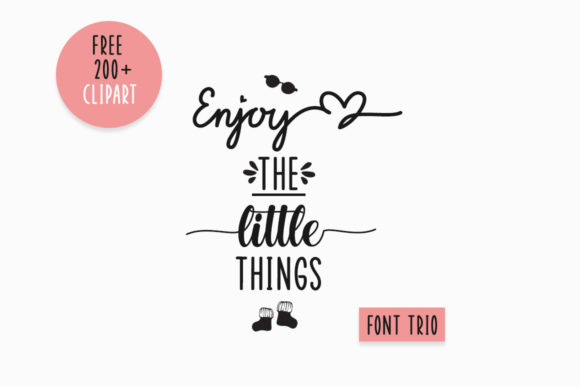
This isn't just another decorative typeface. Enjoy the Little Things is a carefully crafted system. The sans serif component is clean, modern, and highly legible, providing a stable foundation for any design. Its companion script is where the personality shines—playful, flowing, and full of character without sacrificing readability. Together, they create a dynamic visual conversation, allowing you to establish hierarchy and mood with a single, cohesive tool. It’s the kind of premium font that earns its place in a designer's toolkit because it solves multiple problems at once.
The Anatomy of a Versatile Typeface
Understanding the components of Enjoy the Little Things is key to unlocking its potential. The sans serif element is a workhorse. Think of it for body text on a website, clear product descriptions on packaging, or clean headings in a presentation. Its neutral yet friendly character ensures your message is communicated without visual noise. The script font, meanwhile, is the accent piece. It’s perfect for call-to-action phrases, logos, social media quotes, and any element where you want to inject warmth, creativity, or a personal touch.
What makes this particular pairing so effective is its balance. The script doesn't overwhelm the sans serif, and the sans serif doesn't make the script feel out of place. This harmony is crucial for building a strong brand identity. A bakery might use the script for its logo and the sans serif for menu items. A lifestyle blogger could use the script for chapter titles and the sans serif for body copy. The font provides a built-in style guide, ensuring consistency across all touchpoints, from a website header to a printed business card.
Real-World Applications: From Screen to Shelf
Let’s move beyond theory. Where does Enjoy the Little Things genuinely excel? In logo design, the script can form a beautiful, memorable wordmark, while the sans serif can be used for the accompanying tagline or secondary text. This creates a logo system that is flexible and scalable.
For packaging design, the combination is powerful. The script can highlight a product name or a key benefit like "handcrafted" or "organic," drawing the eye. The sans serif can then clearly list ingredients, instructions, or legal information. This approach guides the consumer's eye naturally, improving both aesthetics and usability. In editorial design, such as for magazines or books, the script can be used for pull quotes, chapter headings, or section breaks, adding visual interest to layouts that rely heavily on serif or sans serif body text.
Digital applications are where this creative font truly comes alive. For web design, using the script for hero section headlines or button text can increase engagement and click-through rates. It adds a human element to digital interfaces. On social media graphics, Enjoy the Little Things is a game-changer. The script is perfect for creating impactful, shareable quotes or announcements, while the sans serif ensures any accompanying details remain crisp on small screens. It’s a toolkit for creating a cohesive and professional social media feed.
Making Smart Design Decisions
Choosing any display font or font pairing requires a critical eye. With Enjoy the Little Things, start by evaluating the mood of your project. Is it playful, sophisticated, rustic, or modern? This font leans toward friendly, approachable, and slightly whimsical. It’s ideal for brands targeting audiences in lifestyle, food, wellness, crafts, and boutique retail. It might not be the right fit for a law firm or a heavy industrial manufacturer, but for a yoga studio, a coffee roaster, or a wedding planner, it’s often perfect.
Always test the font in context. Type out your actual headlines, not just the alphabet. Check the legibility of the script at the size you intend to use it. While it's a handwritten font style, it's designed for clarity, but context is everything. Experiment with font pairing beyond its own duo. How does the sans serif look next to a classic serif font for a more traditional layout? How does the script pair with a bold, geometric sans serif for a contemporary contrast?
One of the most practical features of Enjoy the Little Things is that it is PUA encoded. This is a technical detail with a huge benefit: it means every alternate glyph, swash, and stylistic character is easily accessible through your computer's character map or any design software's glyph panel. You don't need special software or workarounds. This unlocks a vast library of customization, allowing you to tailor the script with different endings and flourishes to make it uniquely yours. Always review the full character set before starting a project—you might discover the perfect swash for your logo.
Finally, consider the practicalities of commercial font licensing. Enjoy the Little Things is a design asset that typically comes with a license covering a wide range of uses, from personal projects to commercial client work. Always read the specific license agreement to understand your rights, especially if you're creating products for sale, like printed merchandise or digital templates. Using a properly licensed premium font protects you and your clients, adding a layer of professionalism to your practice.
In the end, the value of a typeface like Enjoy the Little Things is in its ability to make good design more accessible. It provides a sophisticated starting point that can be adapted to countless scenarios, helping you build more coherent brands, more engaging marketing materials, and more beautiful personal projects. It’s a reminder that in design, the details—the little things—often make the biggest difference.