Terrakota: Blending Serif Elegance with Handwritten Charm
In the crowded world of typography, finding a font that feels both personal and professional can feel like searching for a needle in a haystack. You want something that grabs attention, but you also need it to be legible and versatile. This is where Terrakota enters the conversation. It isn't just another typeface; it is a carefully crafted duo font designed to bridge the gap between casual creativity and high-end elegance. By combining a distinctive sand serif structure with a flowing script companion, Terrakota offers a solution for designers, entrepreneurs, and creators who need their text to do more than just sit on a page—they need it to speak.
The Visual Language of Terrakota
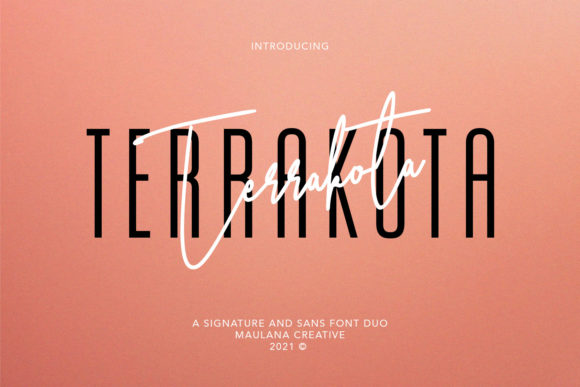
When you first look at Terrakota, you notice an immediate warmth. The "sand serif" aspect of the font gives it a textured, organic feel that standard serif fonts often lack. Unlike the sharp, rigid edges of traditional Times New Roman or the stark minimalism of a sans serif font, Terrakota’s serif characters feel grounded and approachable. There is a subtle irregularity in the stroke weight that mimics the look of natural materials, giving your logo design or heading a handcrafted quality.
Paired with this is the script component. This isn't a chaotic, illegible handwritten font; it is a structured, elegant script that flows with intention. The two styles are designed to work in tandem. You can use the serif for your main headlines to establish authority, and the script for subheadings or accents to add a layer of intimacy and personality. This duality is the core of its appeal. It allows for a complex visual hierarchy without needing to mix and match fonts from different foundries, which can often lead to visual discord.
Where to Apply This Creative Font
The versatility of a premium font is defined by how well it adapts to different mediums. Terrakota shines across a surprisingly wide range of applications, making it a valuable addition to any designer's toolkit of design assets.
Branding and Identity
For small business owners and startups, brand identity is everything. You need a visual language that tells your story instantly. Terrakota is an excellent choice for lifestyle brands, boutique shops, artisanal products, or wellness businesses. Imagine a skincare brand using the serif weight for the product name and the script for the "flavor" or "scent" description on the packaging. It immediately communicates a human touch, suggesting that real people made the product, not a machine. It works beautifully for packaging design, labels, and letterhead, providing a consistent look that feels upscale yet accessible.
Editorial and Web Design
In editorial design and web design, readability is king, but engagement is the queen that keeps the kingdom running. While Terrakota is too decorative for long blocks of body text (as with most display fonts), it excels in pull quotes, chapter titles, and hero sections. On a website, using Terrakota for your H1 and H2 headers can break the monotony of standard web-safe fonts. It draws the eye downward, encouraging the user to keep scrolling. For bloggers and publishers, this font adds a distinct voice to travel journals, food blogs, or lifestyle magazines where atmosphere is just as important as information.
Digital Content and Marketing
The digital space is noisy. To stand out on social media, you need graphics that stop the scroll. Terrakota is a fantastic tool for creating social media graphics. Whether you are designing Instagram stories, Pinterest pins, or quote cards, the font adds a layer of sophistication that generic system fonts cannot match. It is particularly effective for marketing materials like sale announcements or event invitations. The script element can highlight a specific word—like "Sale," "New," or "Free"—to draw immediate attention, while the serif provides the necessary context.
Strategic Typography: Influence and Perception
Choosing a typeface is a psychological decision as much as an aesthetic one. The fonts you use shape how your audience perceives your brand before they even read a word of your copy. Modern typography relies heavily on these subtle cues.
Using Terrakota signals creativity and attention to detail. It suggests that the brand cares about aesthetics and presentation. For entrepreneurs, this can influence brand perception significantly. A well-chosen font implies professionalism. If your marketing materials look polished, customers subconsciously assume your service or product is of high quality, too.
Furthermore, this font aids in recognition. Because Terrakota has a distinct personality, it is easier for audiences to remember. Consistency is key in branding; when you use the same typeface across your t-shirts, badges, posters, and website, you create a cohesive ecosystem. This repetition builds trust. When a customer sees that familiar serif style, they know exactly who they are dealing with.
Practical Guidance for Using Terrakota
As with any commercial font, there are best practices to follow to get the most out of Terrakota. Here is a practical guide for evaluating and implementing this typeface in your next project.
Evaluating Project Fit
Before downloading, ask yourself: What is the tone of the project? Terrakota works best for projects that require a balance of warmth and structure. It is perfect for wedding invitations, lifestyle branding, and boutique signage. However, it might not be the best fit for ultra-corporate finance reports or heavy industrial manuals where a strict sans serif font is required for clarity and cold efficiency.
Testing Font Pairings
While Terrakota is a duo font, you may still need a third option for body text. Because the serif is a display font, it might be too decorative for small paragraphs. Pair it with a clean, neutral sans serif font for the body copy. Think of fonts like Montserrat, Lato, or Open Sans. These provide a neutral background that allows Terrakota’s personality to pop without overwhelming the reader. Ensure there is enough contrast in weight and style so the hierarchy remains clear.
Readability Considerations
When using the script portion of Terrakota, pay close attention to size and spacing (kerning and tracking). Handwritten and script fonts generally require more generous spacing to remain legible, especially at smaller sizes. Avoid using the script for long sentences in small print on labels or business cards. Instead, use it for short, impactful words or phrases. Always print a test sheet or view the design on a mobile screen to ensure the elegant loops of the letters don’t blur together.
Licensing and Styles
When acquiring Terrakota, ensure you review the licensing terms. If you are a freelancer creating a logo for a client, or a business owner using it on merchandise like t-shirts or mugs, you typically need a commercial license. Check if the license covers the specific usage you need (e.g., print on demand vs. standard desktop use). Also, explore the full character map. Creative fonts like this often include ligatures, alternates, and swashes that can elevate your design from good to great. Taking the time to access these hidden glyphs allows for a truly custom look.
Conclusion
Terrakota is more than just a collection of vector points; it is a design tool that facilitates connection. By blending the reliability of a serif with the expressiveness of a script, it allows creators to produce work that feels authentic and polished. Whether you are designing a wedding invite, launching a new product line, or refreshing your website, Terrakota offers a fresh, modern take on typography that resonates with audiences looking for that human touch.