Mountique: A Fresh Take on Classic Elegance
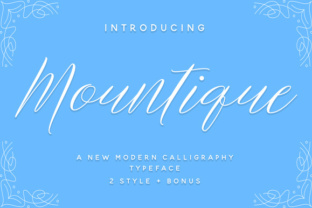
There's a particular kind of challenge in finding a typeface that feels both timeless and fresh. You want something with character, a voice that speaks of tradition and craft, but without looking like it was pulled from a dusty archive. This is the space where Mountique lives. It’s a modern calligraphy typeface that doesn't just mimic old scripts; it reinterprets them. By blending the structured, flowing forms of copperplate with the cleaner sensibilities of contemporary design, Mountique offers a premium font solution that is both classic and elegant without feeling stuffy or overly ornate.
Understanding the Mountique Typeface
At its core, Mountique is a study in balance. The copperplate influence is evident in its graceful, slightly angled strokes and the subtle thick-to-thin transitions within its letters. This gives it a sense of handcrafted authority. However, the contemporary typeface elements bring a crucial modernity. The letterforms are often more open and legible than traditional scripts, with a cleaner flow that avoids the excessive swashes and loops that can date a design. Think of it as a script font that has been refined for today's visual landscape. It carries the personality of a handwritten font but with a consistency and polish that make it highly functional for professional use.
This duality is what gives Mountique its unique appeal. It doesn’t scream for attention with wild flourishes. Instead, it commands respect with its poised, confident strokes. The overall personality is one of sophisticated confidence—it’s approachable enough for a boutique brand yet distinguished enough for luxury goods. It feels personal, as if each letter was considered, yet it maintains a uniformity essential for cohesive branding and editorial design.
Where Mountique Shines: Practical Applications
The real test of any creative font is how it performs in the wild. Mountique’s versatility is one of its strongest assets. It’s not a one-trick pony meant only for wedding invitations. Its balanced nature allows it to adapt to a wide range of projects, making it a valuable addition to a designer's toolkit of design assets.
- Logo Design & Brand Identity: This is where Mountique can truly excel. For brands in the fashion, beauty, lifestyle, or artisanal food space, it provides an instant signature. It can establish a brand identity that feels curated and personal. Imagine it on a logo for a high-end skincare line, a boutique hotel, or a custom jewelry designer. It communicates quality and a human touch without sacrificing professionalism.
- Packaging Design: On a shelf crowded with generic sans-serifs and stark serifs, Mountique can make a product stand out. It’s perfect for label designs, box typography, or brand names on packaging for coffee, chocolate, candles, or cosmetics. It suggests care and craftsmanship, elevating the perceived value of the product inside.
- Editorial & Publishing: In a magazine layout, book cover, or blog header, Mountique can create a stunning focal point. Use it for pull quotes, chapter titles, or feature article headlines. Pair it with a clean sans serif font for body text to create a beautiful visual hierarchy that guides the reader’s eye and adds visual interest.
- Digital & Social Media: For web design, Mountique works beautifully in hero sections, as a display font for special announcements, or in styling website quotes. Its elegance translates well to screen, especially at larger sizes. For social media graphics, it’s ideal for creating impactful quote cards, promotional announcements, or story highlights that need a touch of class and personality.
- Personal & Commercial Projects: From crafting personalized stationery and event invitations to creating merchandise like tote bags or art prints, Mountique is a versatile tool. Its style lends itself to projects where a personal, artistic touch is desired. The included commercial font license typically allows for such wide-ranging use, making it a practical investment.
Making Mountique Work for Your Project
Choosing the right typeface is a strategic decision. Before integrating Mountique, it’s wise to evaluate its fit. Does your project require a voice that is sophisticated, personal, and slightly traditional? If you’re aiming for a hyper-modern, geometric, or ultra-minimalist aesthetic, a different display font might be more suitable. Mountique thrives where warmth, elegance, and a human element are desired.
One of the most important steps is testing font pairing. Mountique, as a script, has a strong personality. It needs a partner that complements rather than competes. A reliable approach is to pair it with a neutral, well-spaced serif font or sans serif font for body copy. For example, using Mountique for a headline and a font like Montserrat or Lora for the supporting text creates a balanced and readable layout. Always test your pairings in context to ensure the readability of your main content isn’t compromised.
When you acquire a font like Mountique, review the full package. A quality modern typography offering often includes more than the basic letters. Look for alternates, ligatures, and swashes. These extras are not just decorative; they are tools. Alternates can help you customize letter combinations to avoid awkward joins, while ligatures create more fluid connections between specific characters, enhancing the handwritten feel. Using these features thoughtfully can make your typography feel more authentic and less templated.
Finally, always be mindful of context. While Mountique is more legible than many traditional scripts, it’s still a display font. Its strength is in headlines, logos, and short phrases. Setting a full paragraph of body text in Mountique would likely hinder readability. Use it strategically for impact and emotional resonance, and let a more straightforward font handle the heavy lifting of long-form reading. By applying Mountique with this understanding, you leverage its classic and elegant appeal to build stronger audience engagement and a more memorable brand perception. It’s a tool for adding depth and character, one considered word at a time.