Money Talks: The Handwritten Font for Authentic Design
In a digital world saturated with sterile, geometric typefaces, there's a growing hunger for designs that feel human, approachable, and genuinely connected. This is where a font like Money Talks enters the conversation. It's not just another script font; it's a carefully crafted tool for injecting personality and warmth into your projects. The name itself suggests confidence and value, but its visual character tells a story of casual elegance and handwritten authenticity. Its relaxed, flowing strokes mimic the natural movement of a hand holding a pen, creating an immediate sense of intimacy and trust that rigid, digital fonts often struggle to achieve.
Understanding the Visual Personality of Money Talks
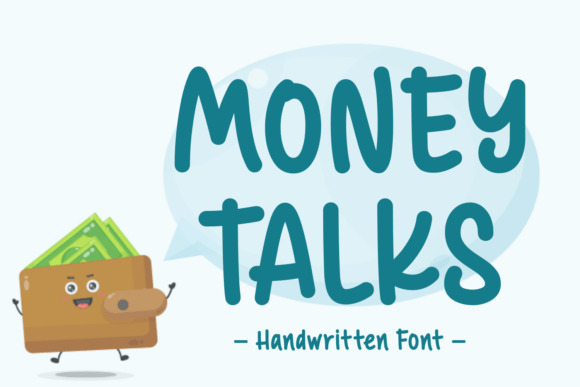
At its core, Money Talks is a handwritten font with a distinctly casual and charming personality. The letterforms feature a natural, slightly uneven baseline and organic connections between characters, which is the hallmark of authentic script typography. This isn't a font that tries to be perfect; its beauty lies in its imperfections. The strokes have a pleasant weight variation, thinning at the ends and thickening on downstrokes, which gives it a dynamic, spontaneous feel. It avoids the overly flourished or calligraphic look, leaning instead into a friendly, legible style that feels like a personal note from a friend. This makes it an incredibly versatile creative font, bridging the gap between formal scripts and overly casual doodles.
The overall appeal of the Money Talks typeface lies in its ability to convey multiple nuanced messages at once. It communicates approachability, creativity, and a down-to-earth sensibility. For a brand, using this font can signal that it values personal connection and doesn't take itself too seriously. For a content creator, it adds a layer of relatable, human touch to digital communication. It’s a premium font that feels personal, making it a valuable asset in any designer's toolkit.
Where Money Talks Truly Shines: Practical Applications
The true test of any display font is its real-world application. Money Talks finds its strength in projects where emotional connection and visual warmth are paramount. In logo design, particularly for lifestyle brands, boutique shops, cafes, consultants, and wellness professionals, it can create a memorable and inviting wordmark. Its style suggests a business that is friendly, artisanal, and customer-focused. However, for logos, it's often best used as a secondary element or for the tagline, paired with a clean sans serif font for the main name to ensure clarity and scalability.
In the realm of social media graphics, this font is a powerhouse. Instagram stories, quote cards, Pinterest pins, and Facebook headers benefit immensely from its personal touch. It grabs attention in a scrolling feed because it breaks the monotony of standard web fonts. For editorial design and publishing, consider using Money Talks for pull quotes, chapter headings in lifestyle magazines, or titles on book covers in genres like memoir, self-help, or contemporary fiction. Its style immediately sets a specific, intimate tone.
Beyond digital, its applications in packaging design and print are extensive. Imagine it on artisan coffee bags, candle labels, handmade soap packaging, or bakery boxes. It instantly communicates a product's handmade, small-batch quality. For web design, it can be used strategically for hero section headlines or key calls-to-action on a homepage, but careful consideration must be given to readability on smaller screens. It’s less suited for body copy but perfect for adding visual interest and guiding the user's eye to important sections.
Making It Work: Pairing, Readability, and Licensing
Integrating a script font like Money Talks into a cohesive design system requires a thoughtful approach. The most critical aspect is font pairing. Because of its strong personality, it should be balanced with a more neutral, stable companion font. A classic serif font like Garamond or a modern, geometric sans serif font like Montserrat or Lato creates a beautiful contrast. The rule of thumb is to let the handwritten font be the star for headlines or accents, while the paired font handles the bulk of the readable text. This establishes a clear visual hierarchy, ensuring your design is both beautiful and functional.
Readability is a non-negotiable consideration. While Money Talks is designed for clarity within its style, it is not meant for long paragraphs of body text. Its role is as a display font—for headlines, subheadings, short phrases, and logos. Always test it at the intended size and medium. A phrase that looks elegant on a desktop screen might become a blurry smudge on a mobile device or when printed small on a business card. Conducting these simple tests is a crucial step in evaluating a project's fit.
Before purchasing or downloading any commercial font, always review the licensing terms. Reputable foundries and marketplaces provide clear information on what is permitted: personal use, commercial use, the number of allowed users or installations, and whether it can be embedded in apps or digital products. For entrepreneurs and small business owners using it in a brand identity, a commercial license is mandatory. It’s an investment in professional design assets that protects you legally and ensures the font creator is compensated for their work, supporting the continued creation of quality typography.
Ultimately, Money Talks is more than just a collection of glyphs; it's a tool for storytelling. It allows designers, marketers, and creators to move beyond generic layouts and craft experiences that feel genuine and engaging. By understanding its personality, applying it to the right contexts, and pairing it wisely, you can leverage this modern typography to build stronger connections with your audience, one beautifully crafted word at a time.